
MASuccess Magazine
The Martial Arts Industry Association's MASuccess Magazine exists to help grow martial arts participation by helping school owners succeed.

8 Ways to Beat the Summer Slowdown

by Frank Silverman
As we approach June and the weather gets warmer, we’re reminded that summer is right around the corner. This change of the seasons needs to be the focus of our attention. We cannot let it sneak up on us. Yes, some schools do perfectly fine and even thrive during June, July and August, but in general, summer is not the best time for martial arts schools.
To find a solution, you have to start by understanding why summer can be troublesome. For the most part, it breaks down to two issues: One, you’re no longer competing with other sporting activities and school. You’re competing with longer daylight hours, which means you’re competing with the pool, the backyard slip-and-slide, the lemonade stand and other spontaneous “summer-only” diversions that can seem more tantalizing than training — which is offered year-round, after all.
Two, people frequently take vacations during some or all of the summer. If they aren’t in town, it’s hard to have them in your class.
Rec...
Plan Your Summer Now!

by Mike Metzger, MAIA Consultant
When I speak with school owners about the challenges they face, one of the most consistent themes is the struggle to keep business thriving during the summer months. One way, of course, is to run daylong camps. These camps can last for one week or several and are a great way to generate revenue. However, not every school owner wants to or can spend all day at his or her dojo. It’s for these martial artists that I offer the following four ways to create value, excitement and revenue during the summer while working normal afterschool hours.
Private-Lesson Packages
Regardless of when summer break starts in your area, you can offer a private-lesson package based for eight weeks. Bundle those private lessons as once-a-week hourlong sessions and offer as many or as few as you have time to teach. An eight-week, eight-lesson private training package can sell for $480.
To make this package even more appealing, offer different themes. For example, stude...
Do You Think You’re Doing Great?

by Frank Silverman
Over the past few months, I’ve done quite a bit of shopping and buying: holiday gifts, upgrades and repairs to the house, a new car, kids’ birthday gifts and more. I was in an in-store and online buying frenzy — my own perpetual Black Friday.
My overall experience with all this shopping was great. Ultimately, I was able to purchase every item I wanted or needed. I paid what I consider fair prices, and I’m enjoying my purchases. That said, when I put on my consultant’s hat afterward, I couldn’t help but evaluate my transactions. How is the quality of the items I bought? How was the service leading up to the purchases? Do I have any buyer’s remorse? Was my shopping experience as good as it could have been? Was it better than expected? Were the salespeople friendly and the online retailers straightforward?
Evaluating everything in detail made me think of my schools in Orlando, Florida. I think I offer a great product. I think my schools have super customer service...
PreSKILLZ: Changing the Way You Think About Teaching Children

by Melody Johnson
Every Tuesday after school, my son has a playdate at a local park. I like to watch him interact with other kids from the neighborhood so I can observe their behavior. I’m a fan of the way kids play, in part because I’m in awe that we adults don’t engage with our peers the way children do.
Unfortunately, the kids almost always exhibit behaviors that prompt their parents to weigh in on how they’re playing. Most of the parental feedback is negative. Not surprisingly, most of the kids’ responses to this are equally negative.
Many times, it’s just a case of mistaken “stage of development” identity. The parents don’t understand that the children’s behavior is natural and common for their age and therefore shouldn’t be addressed so negatively. At the same time, I see many opportunities where a good martial arts program could help make the parents’ job easier and more enjoyable.
One example comes from a child I’ll refer to as Paul. He’s 3 years old, clumsy and prone to...
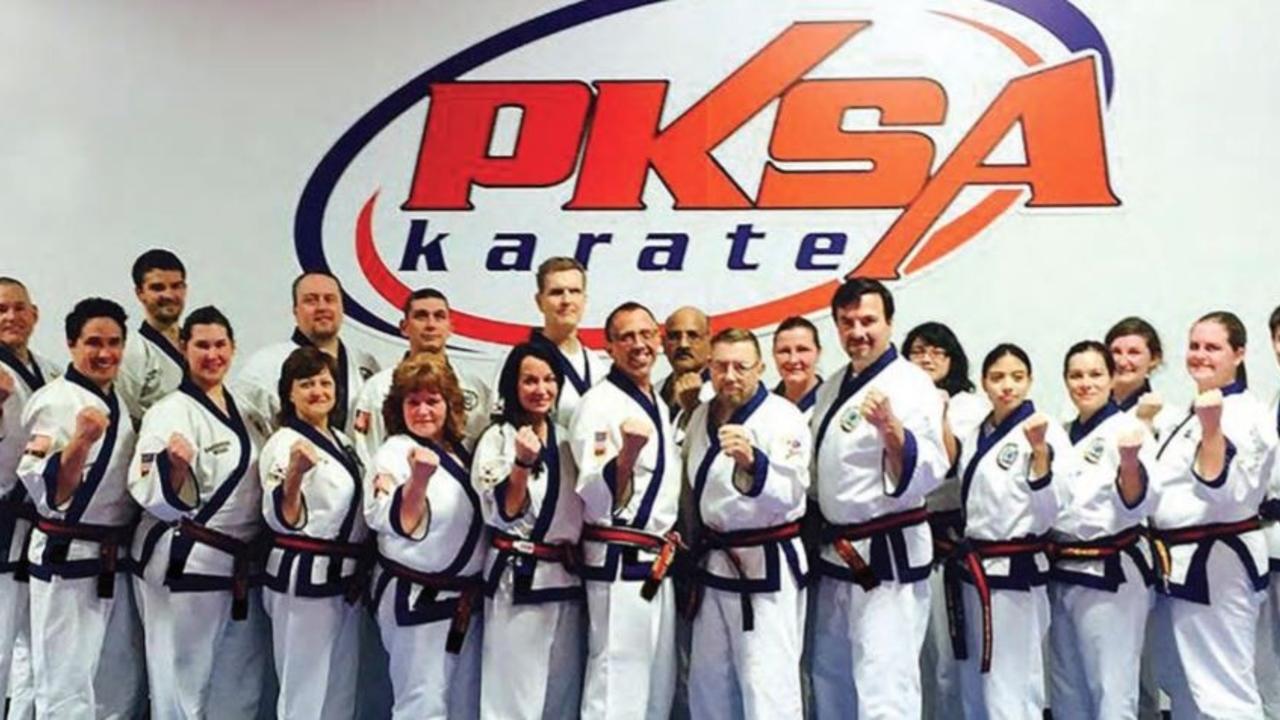
Professional Karate Schools of America: Born in the USA But Now Taking on the World!
by Richard Blaine
It’s not easy to have a large, successful franchise of martial arts schools run entirely by your own students, doubly so if you’re having those schools maintain a fairly traditional curriculum. But Professional Karate Schools of America, or PKSA, has managed to buck the odds and do just that thanks largely to the vision of its founder, Richard Collins Jr.
Collins, along with his father, started training in the Korean art of tang soo do back in 1969. After several years, they began running their own class in the basement of their house. The “school” became a very well-attended, if not prosperous, enterprise for them. Although they never advertised, classes were always packed thanks to word of mouth. The younger Collins was still working a regular job as an aircraft mechanic when a Korean master named C.S. Kim suggested he try teaching martial arts full-time.
“I had a passion to teach, so I decided to take the leap,” Collins said. “I quit my job and said, ‘Let’s try ...

Why I (Finally) Went to the Martial Arts SuperShow – And You Should, Too!

By Deb Cupples
I’ve been teaching karate for over 15 years and have owned my school, Community Karate and Fitness, for 14. Along the way, I have made friends with other martial arts school owners through tournaments, seminars and social media. I fostered a great community through my martial arts connections, but the more it grew, the more I found that we were all struggling with the same issues and some of us were feeling a little stagnant.
For years, I had wanted to attend the Martial Arts SuperShow, but kept talking myself out of it. I had all the normal excuses: it was too much money, I couldn’t take time away from my school, etc. But those excuses weren’t getting me closer to my goals or renewing my passion for my business; they were just excuses.
Then, one day, I just did it. I registered for the Show, booked my flight and thought, “Well, if it’s not worth it, at least I can say I went to Vegas.”
Within the first 24 hours at the Show, I met school owners who had more than f...
Define Your Own Success

by Frank Silverman
Success has many forms, and everyone defines what it looks like for himself or herself. But no matter how different their views of success, there is one time of year when nearly everyone turns to contemplate their goals: January 1.
If you jump into the new year like I do, you find that your thought process begins to revolve around goals. The start of the year is a springboard for introspective evaluation and, often, change. We do this in our personal lives, as well as in our work and business lives.
Focusing on business success is what I do as Executive Director of MAIA. That said, I cannot determine what success looks like for your school. My definition may not be the same as yours. But what I do know is everyone should be driving toward a picture of success as they see it. And you must first define success in order to achieve it.
Think about it: No one wakes up in the morning and says, “I’d like to fail today.” But without a clear, personal definition, how ...
Affordable Ways to Grow Your Martial Arts School

by Kurt Klingenmeyer, MAIA Consultant
Over the past year, I’ve had the incredible experience of working with many growing martial arts schools via MAIA’s Small School Forum. It’s a dedicated Facebook group for school owners with 80 or fewer students. The forum provides tools and advice to help them develop their schools.
One of the most frequently asked questions is, “How do I grow my martial arts school with only a small budget?” The following are five proven ways to do that.
Lead Boxes
This is an old-school form of marketing, but it always delivers results. Visit 10 local businesses that are community owned and tell the owners that you have students and families who may be interested in them. Ask if they have any business materials you could place at the front desk in your dojo.
If they have materials to share, ask if they can reciprocate by allowing you to leave a lead box on their counter. On the outside of the box, feature an enticing special like “one month of free les...

Want Some Help with Your School?
Connect with us! Discover how MAIA can help you on your journey today.
Stay connected with news and updates!

Categories
All CategoriesRecent Posts